At the end of March, we hosted our annual legislative update webinar in partnership with the Chartered Institute of Payroll Professionals (CIPP), giving payroll professionals an overview of the key payroll and compliance changes coming into effect for the new tax year.
The session was led by Fiona Smith, Payroll Training Manager at the CIPP, who covered everything from Statutory Sick Pay reform and minimum wage increases to student loan updates, National Insurance changes, and future payroll legislation employers should already be preparing for.
Here is a recap of some of the main updates discussed during the webinar, along with the practical changes payroll teams and employers should be reviewing ahead of the new tax year.
Statutory Sick Pay changes are the biggest update this year
The biggest focus of the webinar was the significant reform to Statutory Sick Pay from 6 April.
Two major SSP changes are being introduced:
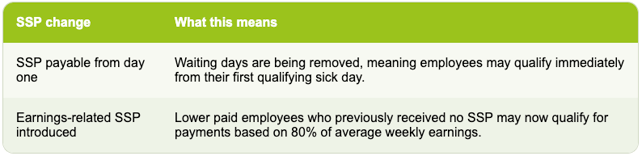
For payroll teams, this is likely to create the biggest operational impact this year. A lot of organisations don’t realise that the transition period itself could create additional manual checks—particularly for employees already absent before April or those moving between old and new SSP rules.
There are three groups employers should pay close attention to:
- Employees already off sick but previously excluded from SSP because of low earnings
- Employees serving waiting days during the April crossover period
- Employees already receiving SSP who may require transitional protection
Good news, but also stay vigilant, linked absences are now likely to become much more important operationally. Even short periods of sickness could connect together under SSP rules, so accurate absence recording will matter more than ever.
To make things easier for you, now’s a good time to review:
- Payroll system settings
- SSP calculation processes
- Company sick pay policies
- Absence tracking procedures
Income tax and National Insurance remain relatively stable
Compared to previous years, tax and National Insurance changes are fairly limited this year.
Income tax thresholds and the personal allowance remain frozen until 2031. While this gives employers more certainty for planning purposes, it also means more employees may gradually move into higher tax bands as wages increase over time.
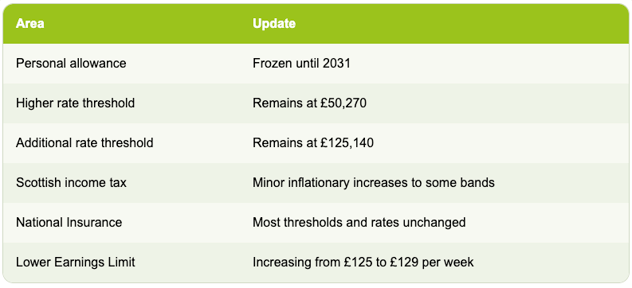
The webinar also reminded employers to double check National Insurance category letters—particularly where deferred National Insurance, apprentices, veterans, or under-21 employees are involved. This works well when processes are tightly controlled, but be aware that incorrect category letters remain a common payroll error area.
Statutory payment rates are increasing
Several statutory payment rates are increasing from April, including maternity, paternity, adoption, shared parental, and parental bereavement pay. The standard weekly rate is increasing from £184.03 to £194.32.
As usual, these payments remain the lower of:
- 90% of average weekly earnings
- Or the statutory weekly rate
One important reminder from the webinar was that maternity and adoption pay still receive 90% of average weekly earnings for the first six weeks with no cap applied.
The session also highlighted updates to Northern Ireland Statutory Parental Bereavement Pay, including expanded eligibility and separate FPS reporting requirements for payroll teams.
For employers reclaiming statutory payments:
- Most employers can reclaim 92%
- Small employers can reclaim 108.5%
From April, the small employer compensation uplift is increasing from 8.5% to 9%.
Student loan updates
Most student loan repayment thresholds are increasing in line with inflation, while postgraduate loan thresholds remain frozen at £21,000.
The main change this year is the introduction of Plan 5 student loans for English students who started their studies from September 2023 onwards.
The webinar also highlighted that:
- Plan 5 becomes the default plan type where no starter checklist or HMRC notification is available
- Payroll teams should make sure they’re using the latest starter checklist version
- Incorrect plan selection can still be corrected later through HMRC notifications
Minimum wage increases continue to create pressure
National Minimum Wage and National Living Wage rates are increasing significantly again this year, with the National Living Wage rising to £12.21 per hour.
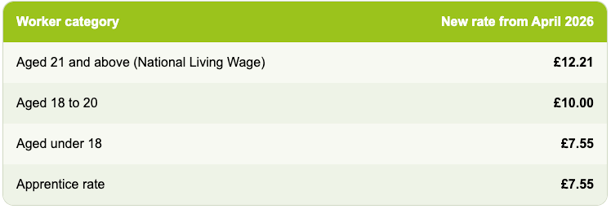
The webinar highlighted that many recent HMRC breaches have not been deliberate underpayments, but technical compliance issues instead.
Some of the biggest risk areas include:
- Salary sacrifice arrangements
- Apprentice pay transitions
- Uniform and equipment deductions
- Additional unpaid hours
- Payroll deductions linked to employer costs
A lot of organisations don’t realise that even well-paid salaried employees can accidentally fall into technical minimum wage breaches if additional unpaid hours aren’t being monitored properly. This is one area where payroll, HR, and operational teams need to work closely together—not just payroll alone.
Automatic enrolment changes are still coming
While automatic enrolment thresholds remain unchanged for now, future reforms are still on the horizon.
The webinar confirmed that future plans still include:
- Reducing the minimum enrolment age from 22 to 18
- Removing the lower earnings limit so pension contributions apply from the first pound earned
No implementation date has been confirmed yet, but employers were encouraged to factor these future costs into long-term workforce planning.
Company car and benefits reporting changes
The webinar also covered updates to company car tax and future benefit reporting changes.
Company car tax percentages are increasing again, particularly impacting hybrid vehicles due to updated emissions testing standards. Some vehicles currently sitting in lower tax bands may move into much higher brackets over time as testing standards change.
The session also highlighted:
- The end of homeworking tax relief claims through self-assessment
- Simplified rules around reimbursed minor benefits
- Preparations for mandatory payrolling of benefits from April 2027
Good news, but also one to keep firmly on the radar—mandatory payrolling of benefits will require process changes for many employers, particularly around RTI reporting and payroll workflows.
If you'd like to recap the session, you can watch the full recording here: