At the end of March, we hosted a HR Employment Rights Update webinar, led by Sarah Gray. The session focused on the biggest employment law reforms coming into effect throughout 2026 and 2027, along with the practical steps employers should already be taking to prepare.
The webinar covered a lot of ground—from day one Statutory Sick Pay rights and family leave changes through to unfair dismissal reform, harassment legislation, and the upcoming ban on fire and rehire practices.
Statutory Sick Pay reforms arrive in April
One of the biggest immediate changes is the reform to Statutory Sick Pay (SSP), which comes into effect from 6 April.
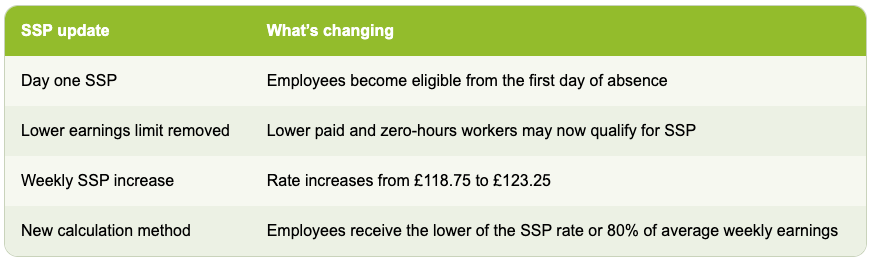
Businesses may initially see an increase in short-term absence, particularly among workers who previously couldn’t afford to take unpaid sick days. However, reducing “presenteeism” could also improve longer-term absence levels by reducing workplace illness spread.
Key takeaway: Review absence policies, payroll setup, and manager training now to make sure your processes are ready for day one SSP and the wider eligibility changes coming into effect from April.
Day one family leave rights are expanding
From 6 April, paternity leave and unpaid parental leave both become day one employment rights. Previously, employees needed qualifying service before becoming eligible.
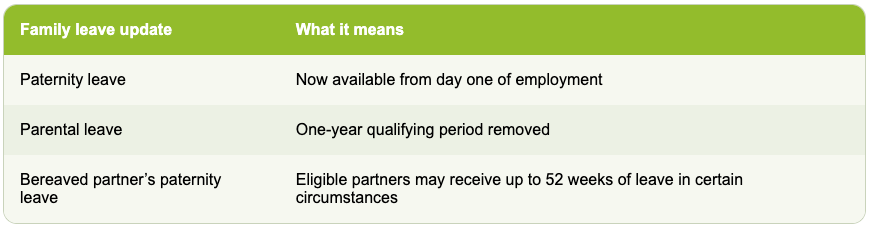
Another important change is the introduction of bereaved partner’s paternity leave, allowing eligible partners up to 52 weeks of leave if the mother or primary adopter dies within the first year of a child’s life.
Key takeaway: Employers should update family leave policies and make sure managers understand the new day one rights, as employees are likely to raise these questions directly with line managers first.
Collective redundancy penalties are doubling
One of the biggest financial risks within the new legislation is the increase to collective redundancy consultation penalties.

Key takeaway: The financial risk attached to collective redundancy mistakes has increased significantly, making early consultation, strong documentation, and correct process more important than ever.
Sexual harassment legislation is tightening further
From April, workers who report sexual harassment concerns may now receive whistleblowing protection where the issue is believed to be in the public interest.
This is more likely to apply where:
- Multiple employees are affected
- There is evidence of an ongoing cultural issue
- The behaviour creates a wider workplace risk
Employers should review whistleblowing procedures, refresh manager training, and ensure employees feel confident raising concerns appropriately.
Key takeaway: Complaints relating to sexual harassment may now carry additional whistleblowing protection, making clear reporting processes and manager training increasingly important.
The Fair Work Agency will introduce stronger enforcement powers
A new Fair Work Agency is being established from April, bringing together several existing employment enforcement functions under one body.
Importantly, the agency will have powers to:
- Investigate holiday pay and SSP underpayments
- Inspect holiday entitlement records
- Fine employers for non-compliance
- Enforce holiday pay record keeping obligations
Holiday pay calculations are a major risk area, particularly for:
- Part-time workers
- Casual workers
- Employees with overtime or commission
- Irregular-hours workers
Key takeaway: Accurate holiday pay calculations and strong record keeping processes are becoming increasingly important, particularly for businesses with irregular-hours, part-time, or overtime-heavy workforces.
Harassment laws tighten further in October
New protections around workplace harassment are due to come into force from October 2026.
Two major changes are planned:
- Employers may become liable for harassment carried out by third parties such as customers, contractors, or suppliers
- Businesses will need to demonstrate they have taken “all reasonable steps” to prevent sexual harassment
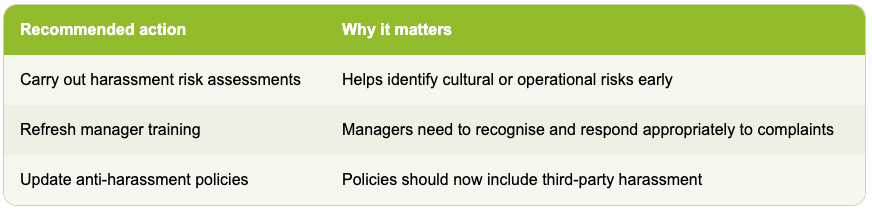
Key takeaway: Employers should start reviewing harassment risk assessments, reporting procedures, and preventative measures now, well ahead of the October reforms.
Unfair dismissal reforms arrive in January 2027
Another of the most significant future changes is was the reduction of the unfair dismissal qualifying period from two years to six months from January 2027.
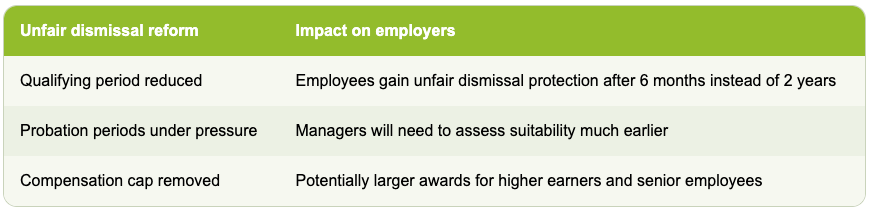
Practical recommendations included:
- Reducing probation periods
- Tightening recruitment processes
- Improving probation review structures
- Tackling underperformance much earlier
- Training managers on performance management processes
Key takeaway: Employers should begin tightening recruitment, probation, and performance management processes now, as the reduced qualifying period will significantly shorten the window for assessing new hires.
Fire and rehire reforms are also on the horizon
The government’s proposed ban on fire and rehire practices is currently scheduled for January 2027.
Under the new rules, employers will no longer be able to dismiss employees for refusing changes to key contractual terms such as:
- Pay
- Working hours
- Pension entitlements
- Shift patterns
- Time off arrangements
Key takeaway: Businesses considering major contractual changes may want to review these sooner rather than later, while there is still greater flexibility available under the current legislation.
The overall message from the webinar was clear: while some reforms are already live from April, many of the biggest operational changes are still ahead.
Preparation now—particularly around policies, manager training, probation processes, and record keeping—will make future compliance significantly easier.
If you'd like to recap the full session, you can watch the recording here: